

You have a mirror. You also have a chair with yesterday’s outfit on it. Most full-length mirrors solve the first problem and create the second, because the clothes you just took off have nowhere to go.
A mirror with a built-in rack sounds like the obvious fix. The complaints about them are boringly consistent, though. The frame wobbles where it meets the base. The folding stand feels thin enough that a dog could knock it flat. The glass turns up with tape showing at the edges, or straight lines bend when you move your head. None of that appears in the hero photo.
Here is what separates a good one from a bad one, in the order that matters.
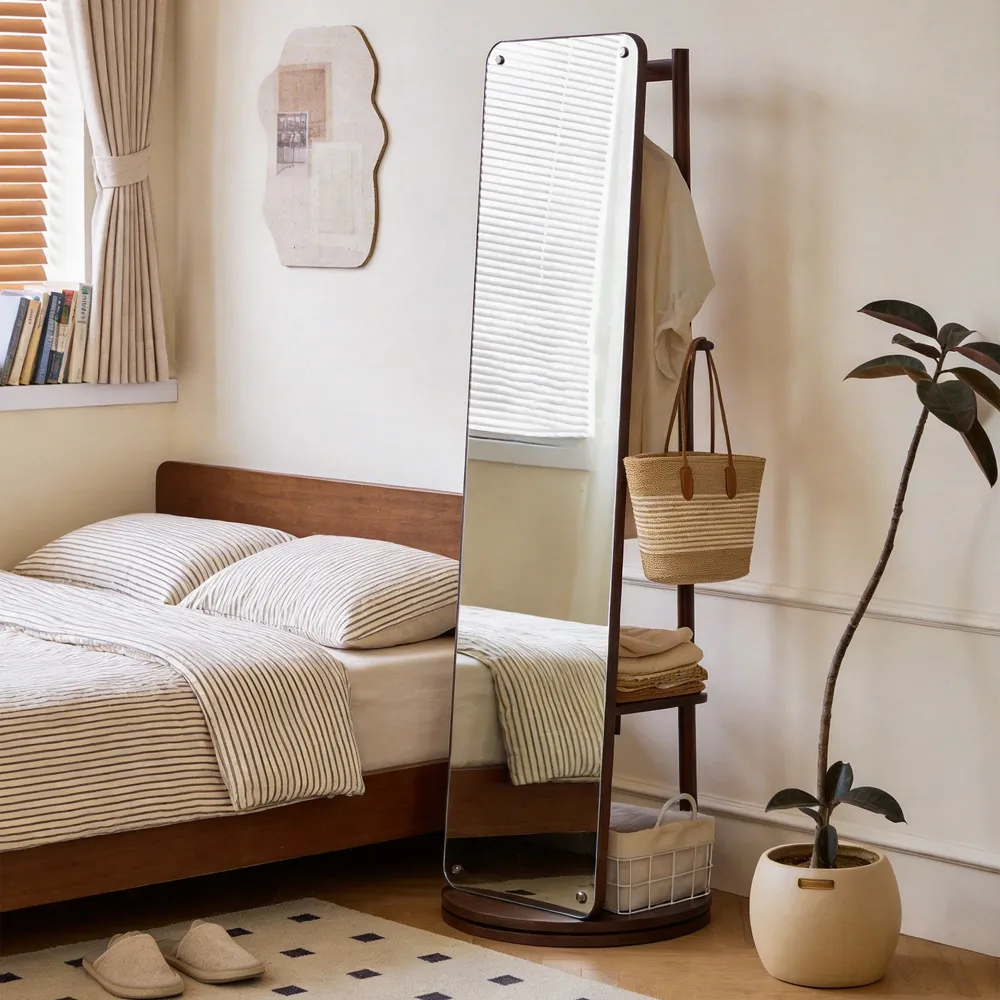
1. How it stands, not how it looks
Three designs exist. Leaning mirrors rest against a wall and need floor depth plus something solid behind them. Kickstand mirrors fold out a thin leg, and that leg is where most wobble complaints come from. Freestanding mirrors sit on a real base, usually a disc, and take the load from below instead of from a hinge.
If the product page never states the base width, treat that as a warning. A tall mirror needs a base wide enough that it cannot rotate past the point where it wants to fall. Ask for the number. Ours is 19.69 in across, on a double layer, with the whole piece weighing 50.22 lb.
2. Glass, and what the edge looks like
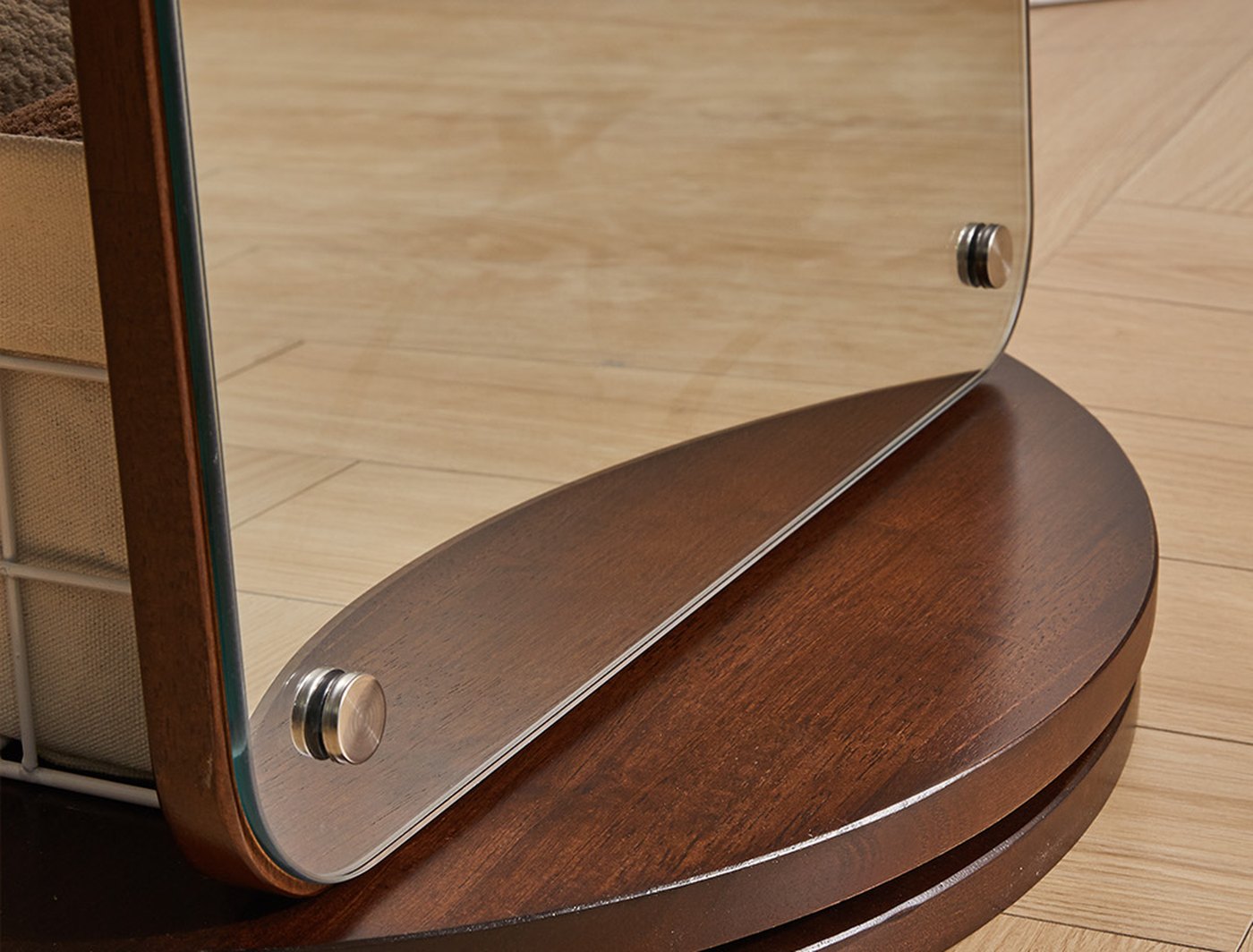
Glass is where cheap mirrors hide. Panels around 3 mm distort, and the effect worsens as the panel gets taller. Four millimetres is the floor for a full-length mirror; anything above about 1500 mm wants 5 to 6 mm. A shatter-retardant film is not tempered glass, though both get sold with the same three words on the box.
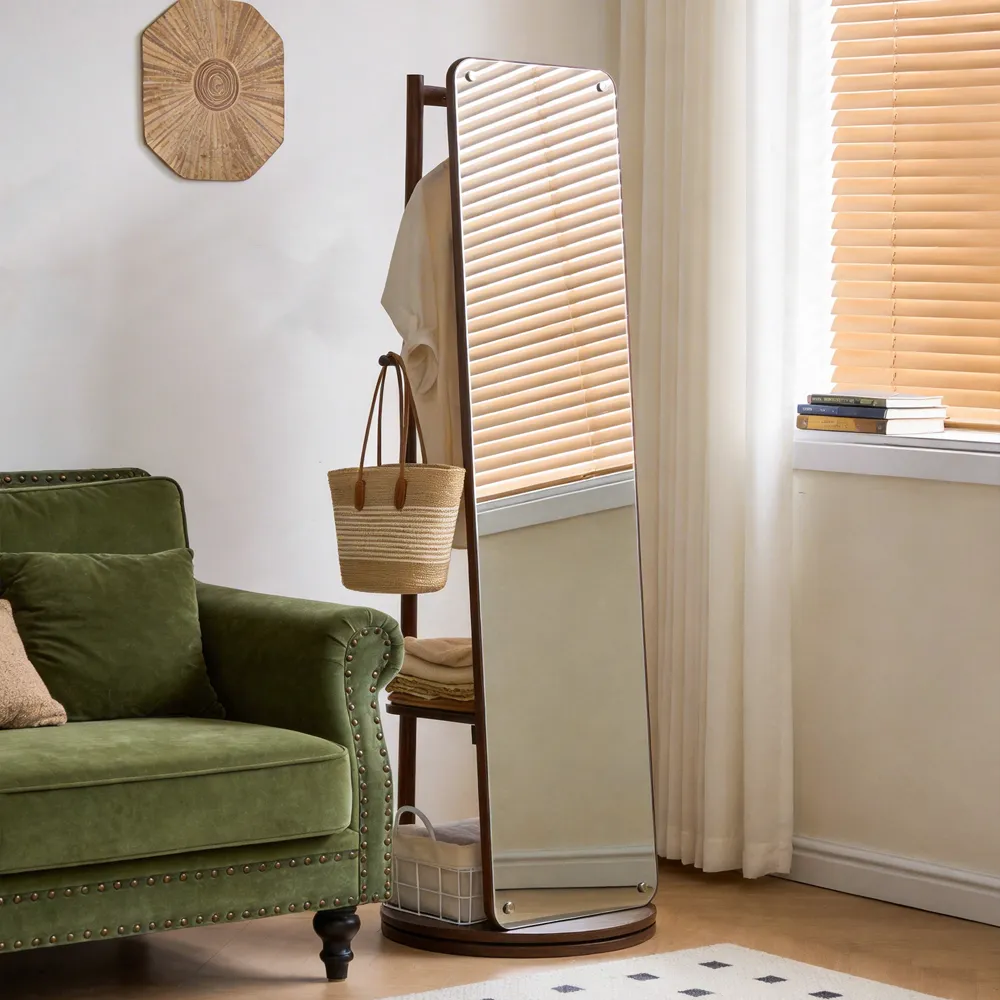
Look for a stated thickness, a stated glass type, and a close-up of the edge. Then look at how the panel is held. Ours sits in a routed slot in the base and is pinned by four metal fasteners, so the glass is not hanging off clips that work loose.
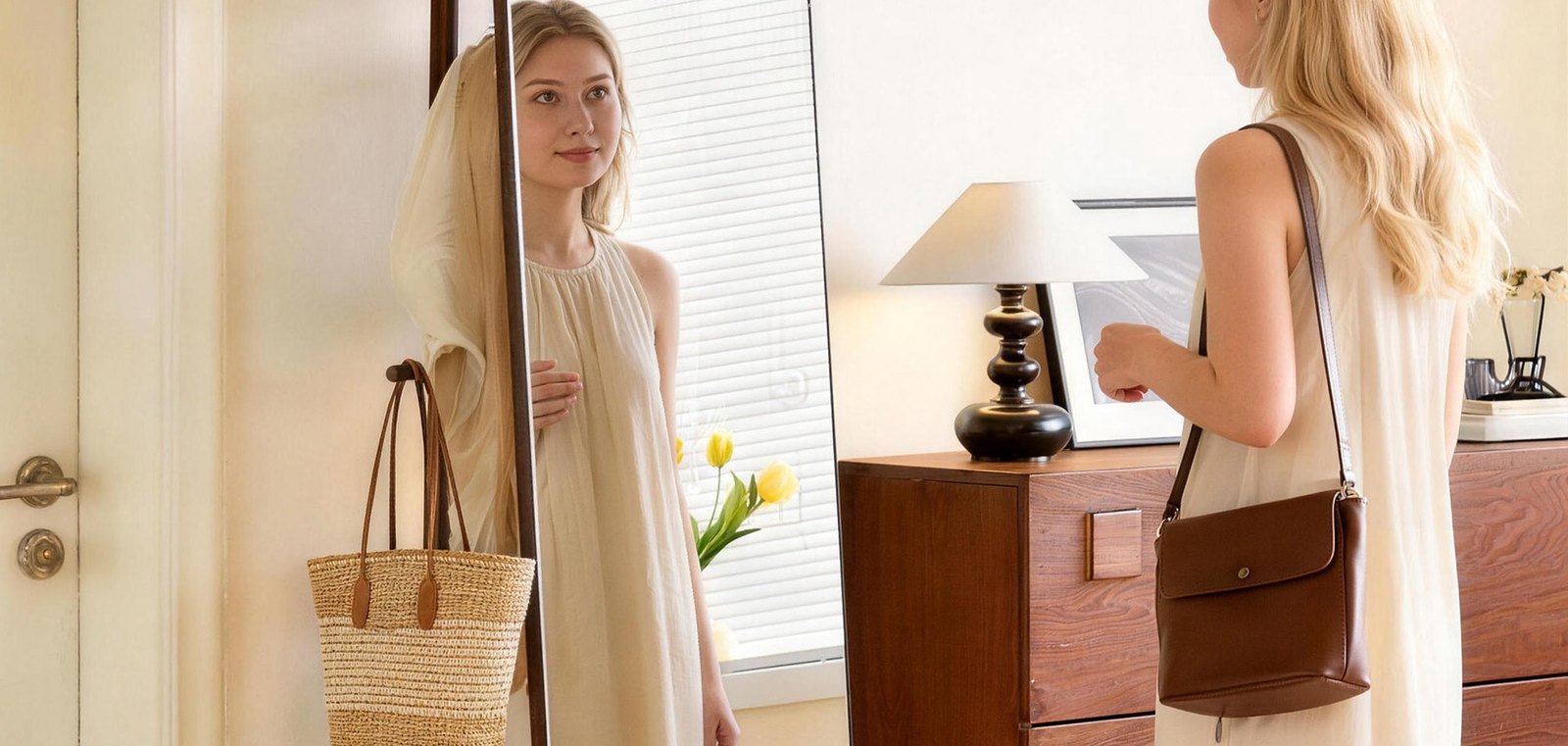
3. Height against the person, not against the wall
Height is the number buyers get wrong most often, because every listing says full length. For a flat mirror, you see the top of your head only when the top edge reaches roughly halfway between your eyes and your crown. Put the mirror against a wall at eye level and the maths is unforgiving: your mirror has to be tall enough that its top edge clears that midpoint.
Ours carries 64.76 in of glass, with the frame top at 66.53 in. That gives a head-to-toe view for people up to about 5 ft 9 in. At 6 ft, your crown sits just outside the frame. If you are tall and want your hair in the shot, buy a 70 in panel instead of a wider 65 in one.
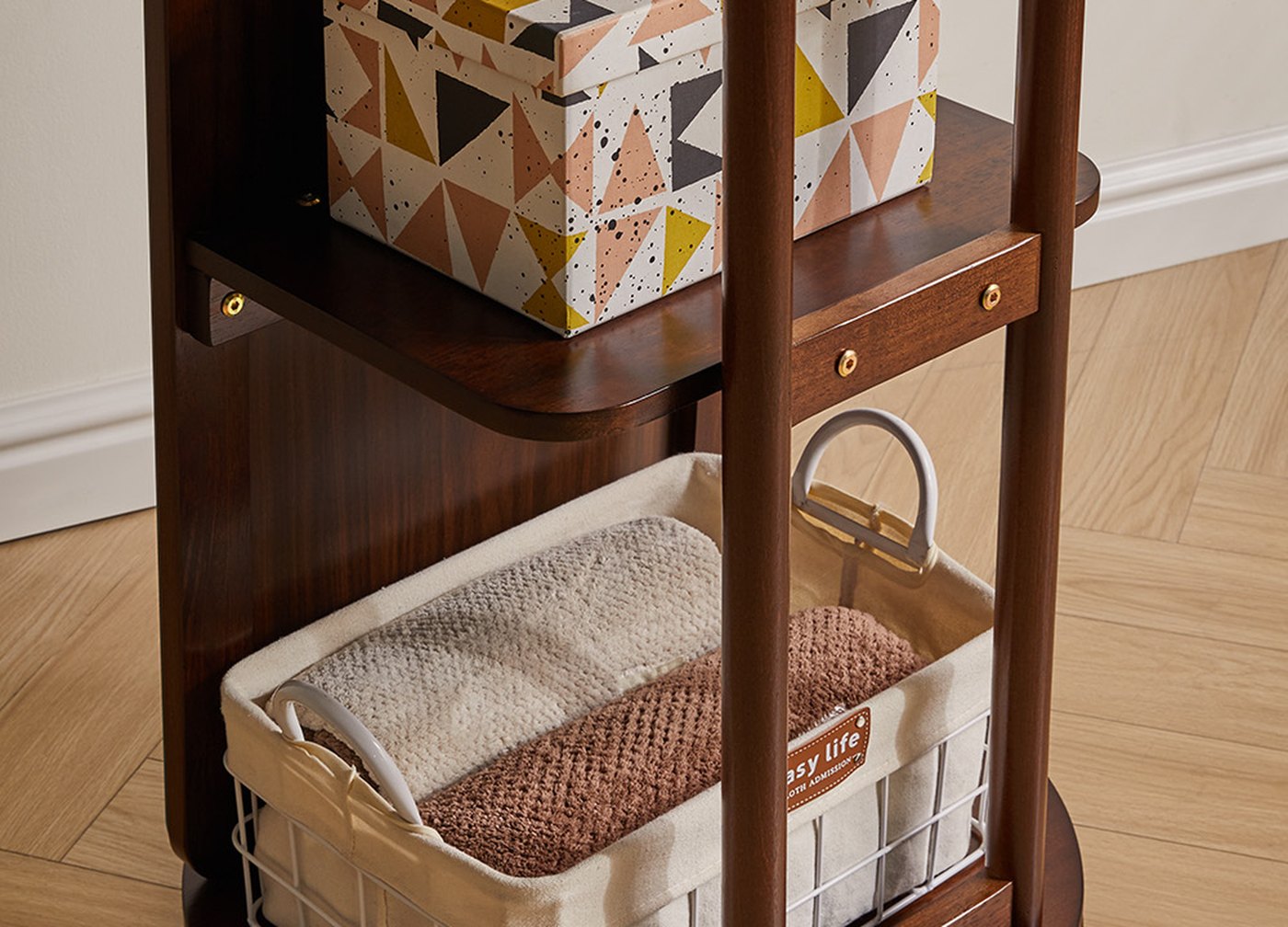
4. Storage that holds weight
A rack that sags is worse than no rack. Three details tell you whether the storage is real: how the bar is fixed, how the shelves are supported, and how far apart the hooks sit. A bar mounted between two uprights takes a row of coats. A bar screwed onto a thin back panel takes three hangers before it starts to bow.
Ask for per-shelf and per-bar load ratings, and compare them with what you plan to hang. Comparable solid-wood swivel mirrors quote around 15 to 16 lb per hook and about 50 lb on the hanging bar. Ours runs a solid rubberwood bar between the uprights, two staggered hooks on the side post, and two shelves screwed into the uprights on corner brackets.
5. The turret and the flat pack
A rotating mirror is worth having only if it turns under one hand and stays where you leave it. The mechanism is a turret: a ring of steel balls inside a metal track. Bigger ring, more balls, less rocking. Ask for the ring diameter and the ball count. A cycle count with no test report is marketing.
Assembly matters more than people expect, because a glass panel this size is not a one-person lift. Ours is four steps and eleven bolts with a 4 mm Allen key in the box, no drill, no wall anchor. Allow 20 to 30 minutes with two people. The carton is 68.31 in long, so it arrives at the door rather than in the room.
Where this one lands
The Runva rotating mirror sits in the middle of the category, not the top. 64.76 in of glass, a 19.69 in double-layer base, a support rod across the back, four fasteners holding the panel, an 11.81 in turret with 140 steel balls. Solid rubberwood in walnut, so it reads warm rather than glossy. $158.98 with free shipping from a US warehouse, which is leaning-mirror money for something that also holds your clothes.
Who should not buy it
Skip it if the room has less than about 20 in of free floor, because you will step around the base every day. Skip it if there is a toddler or a large dog and you cannot shut the door on it: a 50 lb freestanding mirror is not a child-safe object, and no wall strap comes in the box.
Skip it if you want a wall-mounted mirror, since the frame is not built to hang. Skip it if you are over 5 ft 10 in and want your whole head in frame. And check the returns policy before you order, because this category often sells final sale.
For everyone else the value is narrow and real: the mirror stops being something you lean, and becomes the place your clothes go.