

Half an hour after the nightstand is in place, a glass of water goes over on the top. The reflex is a disinfecting wipe — it is under the sink, the label says gentle on surfaces. That wipe is the fastest way to take the shine off a new water-based finish.
Eleven of the 36 furniture listings on this site name the finish, and five use the same two sentences: “Wipe with a damp cloth. The water-based finish will not yellow.” Six more shorten it to “Water-based finish, so a damp cloth handles most spills.” That is the entire care instruction. Here is the part it assumes you already know.
A water-based finish is a film, not a feed
Wood finishes come in two families. A penetrating oil sinks into the wood and gets topped up every few months. A film finish — varnish, polyurethane, water-based acrylic — builds a layer on the surface and stays there. Water-based topcoats are the clear ones, which is exactly why a listing bothers to promise it will not yellow.
So whatever you spray reaches the film, not the wood: lemon oil and “conditioning” polish are for oiled furniture, and on a cured topcoat the oil sits there until something wipes it off. The care sheet for a General Finishes water-based topcoat names silicone, alcohol, ammonia and acid as things to keep away.
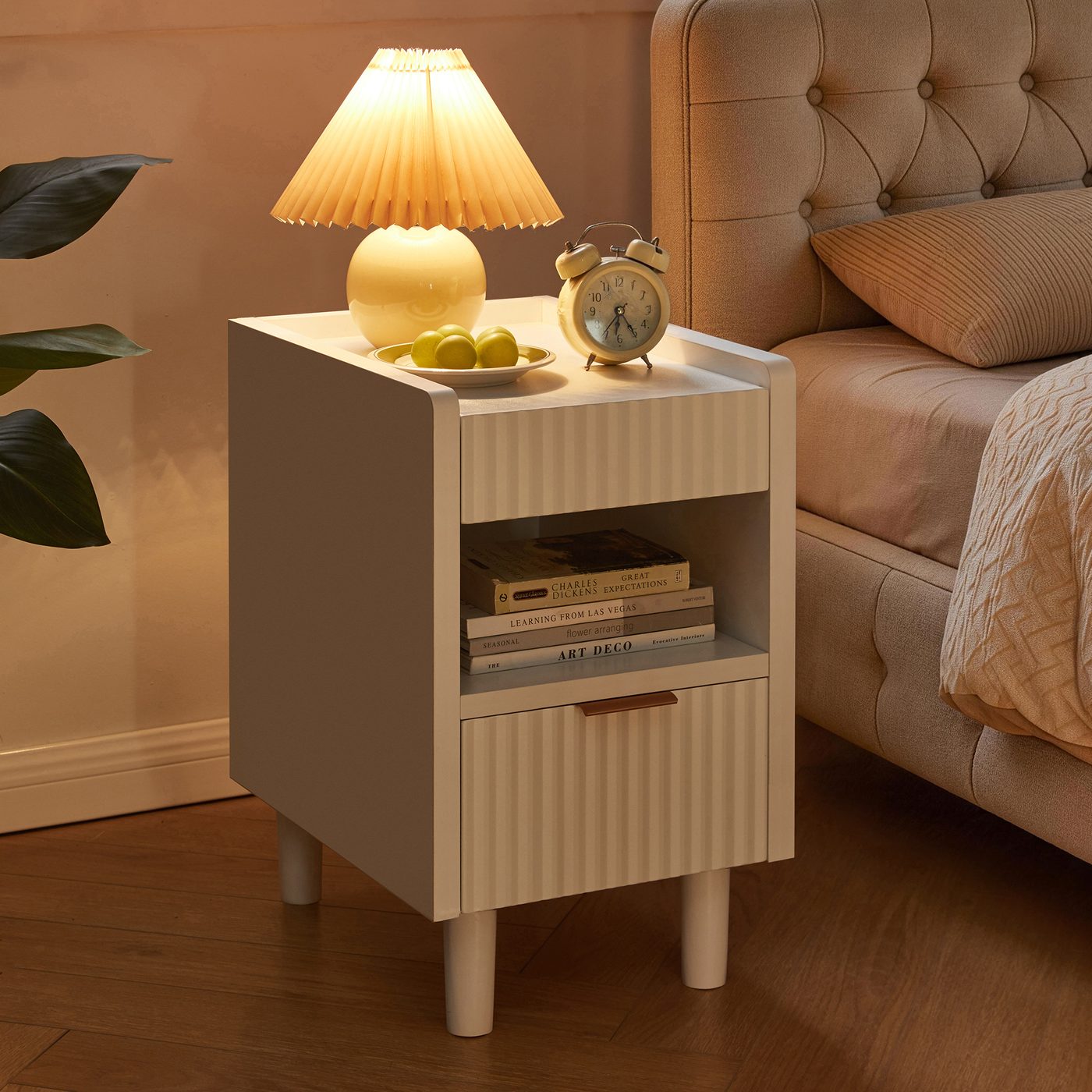
The material underneath does not change that line. Of the eleven listings that name the finish, eight are solid wood, two are MDF (the white fluted nightstands and their walnut pair) and one is engineered wood (the modern bedside tables). Same instructions: it is the same kind of topcoat over all three.
The first three weeks are different
Here is a number the pages do not give you. That General Finishes sheet says to “allow 21 days for a water-based finish to cure and 30 days for an oil-based finish to cure before cleaning,” and to treat the surface gently until then.
Your piece likely cured at the factory, not in your hallway. But the number explains the first month: the film is still hardening, and that is when a wipe does the most damage. A wrung-out cloth is the right first answer to a spill on a new piece.
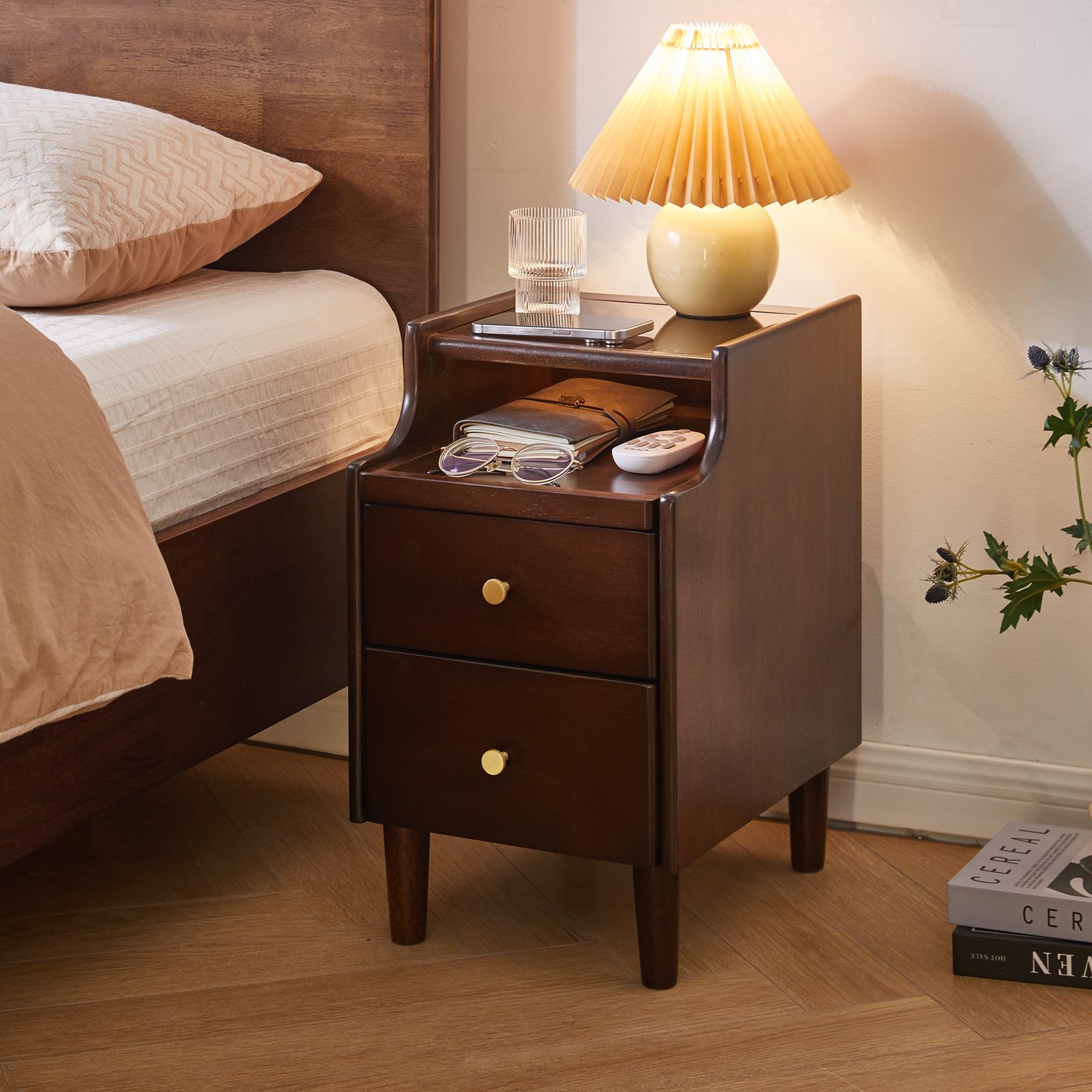
What the damp cloth should actually be
“Damp” is doing real work in that sentence. A cloth that drips leaves standing water, and standing water is what marks a film finish. The care sheet describes the routine:
- Dust first with a water-dampened cloth, because dust “can build up over time and may scratch or dull finishes if not removed regularly.” A dry paper towel pushed around a gritty top is an abrasive.
- Fingerprints, cooking fumes and smoke residue come off with mild soap and water — a drop of dish soap in a bowl, not a spray bottle.
- Wipe with the grain, then dry the area. Leaving it wet is how a spill becomes a mark.
Four things that dull it, and the exception on the same sheet
The avoid list, in the maker’s words: furniture polish, cleaners or dusting sprays that contain silicone, alcohol, ammonia, and anything acidic. That covers glass cleaner, hand sanitizer, disinfecting wipes, most aerosol dusting sprays, and vinegar-and-water.
Silicone gets its own warning because “some contaminants, such as silicone, seep through finish into the wood and often cannot be removed,” and later touch-ups “may not adhere properly” over them. That is a finish maker describing its own product, not a retailer protecting a category.
Then the exception, in the same document: “We have successfully cleaned with Clorox wipes for occasional cleanups.” Occasional, not weekly — one pass did not visibly damage the top, while alcohol and ammonia stayed on the avoid list. The rule that survives the contradiction: water and mild soap routinely, a stronger wipe for something greasy, never as the habit. On the white pair, a dull patch shows up sooner than on walnut.
The polish argument: buildup, or a solvent that thins the film
Ask whether polish belongs on a topcoat and you get two answers that cannot both be right about the mechanism.
The finish maker says silicone migrates into the film and stays. A professional finisher writing for Rockler says the opposite: “Pledge, and products like it, do not add ‘waxy buildup’ to furniture. In fact, the solvents commonly included in these products actually help wipe away a little of the ‘real’ finish every time they are used.” The shine, he says, is “a silicon-induced gloss,” and the buildup story sold wax.
Both agree weekly polishing is not care. The useful question is what you are fixing: if the top looks dull, is it dirt on the film or the film wearing thin? Soap and water answer the first; nothing in a bottle answers the second.
Where “handles most spills” stops being true
A water-based film handles the spill you notice and wipe up. It is less forgiving of the one you do not. Bob Flexner, writing about white water rings, describes why: water enters a finish that is porous, dissolves impurities, and leaves voids when it dries — and “with old varnish and water-based finish, which can watermark because the finish is porous, you can’t use a solvent. You’ll have to abrade the finish.”
Two consequences, both bad for folk remedies. A ring is not dirt, so no cleaner removes it; a sweating glass left overnight on a nightstand top or a seeping vase is the usual cause. And abrasion changes sheen — it makes glossier finishes flatter and flat finishes glossier — so the repair is the whole surface, not the ring. Mayonnaise, toothpaste and a warm iron circulate because they sometimes work; Flexner calls the outcome unpredictable, with no sure-fire procedure.
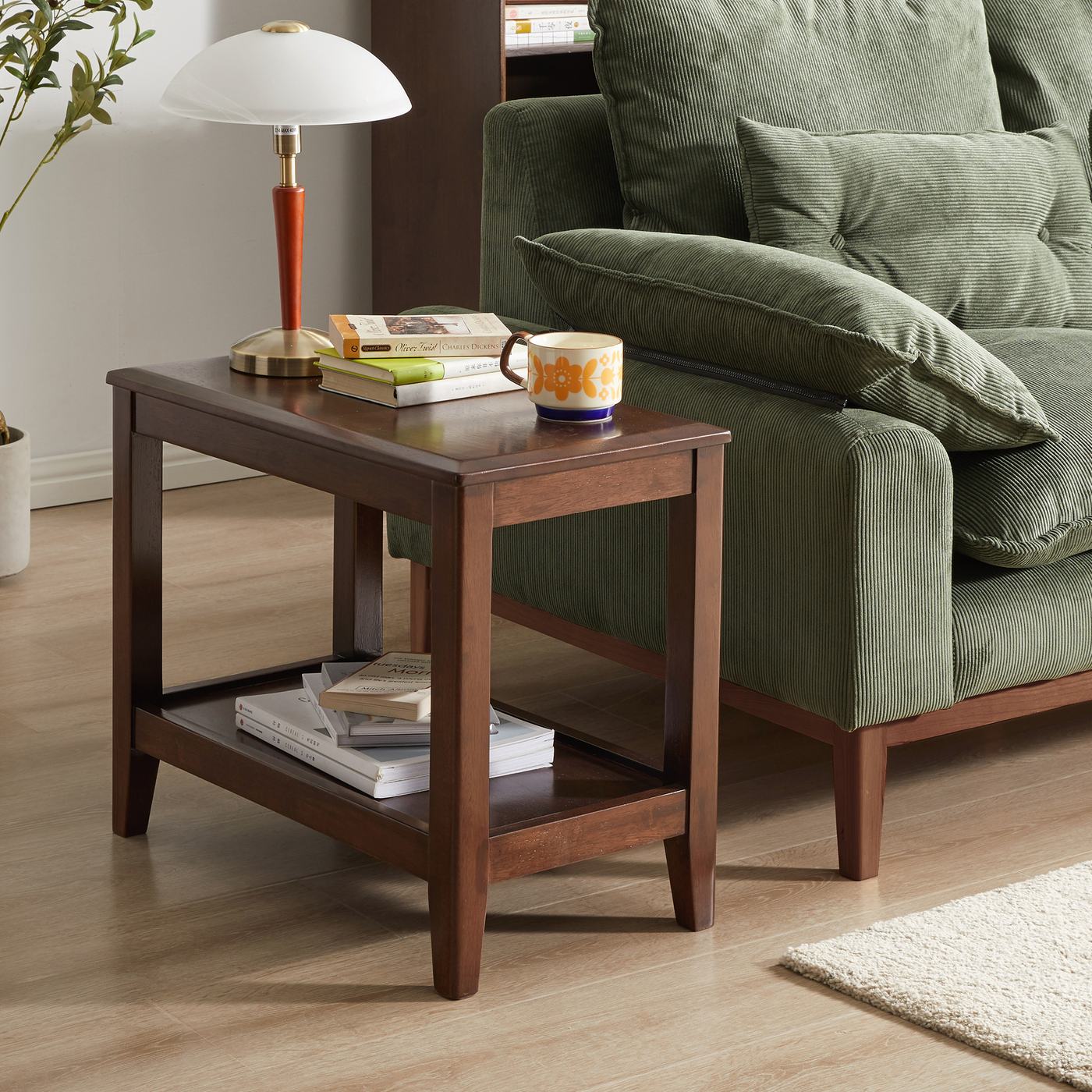
That is the limit of the promise on a small end table: “a damp cloth handles most spills” is true of spills, not of water left sitting all night, and it says nothing about a finish five years old and starting to craze.
What the listing will not tell you
Three things no page of ours gives you, checked across all 36:
- Sheen. No page says satin, matte or gloss. If a ring ever needs rubbing out, you cannot match the sheen from the page — ask before buying, because the answer decides whether a local repair is possible.
- A cure date or a finish brand. “Water-based” names a family, not a product, and two topcoats in it can carry different care rules.
- Sun, which moves colour faster than dust does. Three listings add a line most do not: keep the piece “out of direct sun if you want the colour to stay even.” A finish that will not yellow can still sit on a top that shifts tone.
Wipe up the spill while it is still a spill, and leave the wipes in the kitchen.
Sources
- General Finishes — Instructions: General Finishes High Performance (water-based topcoat instruction sheet, PDF) — https://thewoodsmithstore.com/wp-content/uploads/2020/07/Instructions-General-Finishes-High-Performance.pdf — accessed 2026-11-15
- Rockler — How Do I Fix a Sticky Table Finish? (Tim Inman, 2020-10-18) — https://www.rockler.com/learn/fix-sticky-table-finish — accessed 2026-11-15
- Popular Woodworking — Fixing White Water Rings (Bob Flexner) — https://www.popularwoodworking.com/finishing/flexner-on-finishing-white-water-rings/ — accessed 2026-11-15