

Two years into a white nightstand’s life, the drawer front and the side panel that has faced the window stop matching. One is still the color you bought. The other has a cream cast that reads like dirt and doesn’t wipe off.
That mismatch almost never comes from the wood. On a painted piece the wood is hidden; what you are looking at is the coating on top of it. Three unrelated things make a coating change color, and which one you have decides whether anything can be done.
| What you see | What is changing | Will a cloth fix it? |
|---|---|---|
| Warm amber cast on wood under a clear finish | Oil-based varnish, polyurethane or oil darkening as it ages | No |
| Cream-to-yellow cast on white or pale paint | Alkyd (oil-based) enamel oxidizing; heat; lack of light | No |
| Dull yellow film sitting on the surface | Dust, cooking grease, smoke, ammonia cleaners | Sometimes — washing lifts the first three |
The first two rows are the coating changing; the third is something sitting on it.
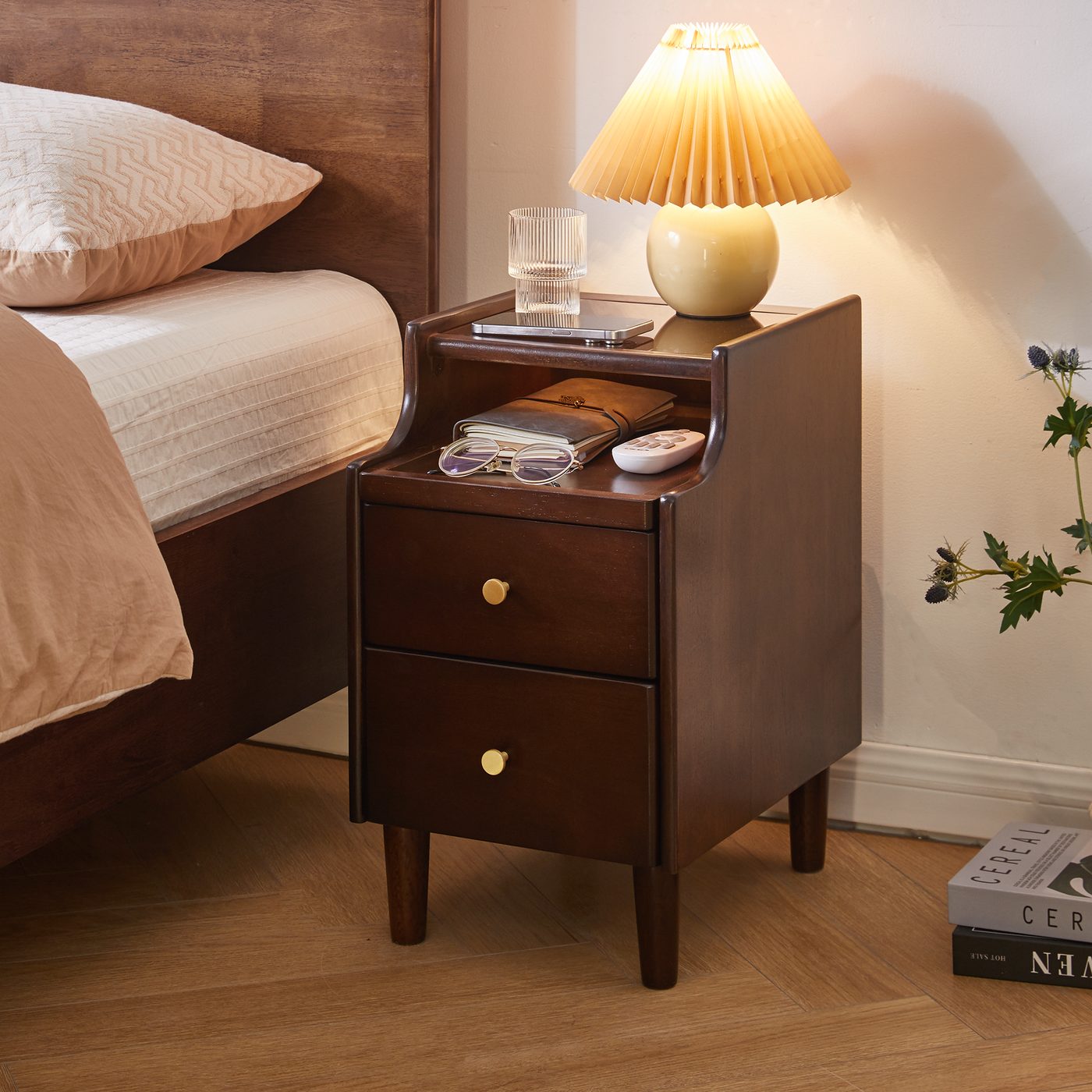
The clear coat keeps working after you buy it
Once a film finish goes on, you are also looking at the finish — and some finishes are not color-neutral.
Popular Woodworking’s side-by-side comparison of seven finishes on maple, oak, cherry and walnut puts it plainly: “Oil-based varnish, including polyurethane varnish, and boiled linseed oil add a darker yellow/orange tint than lacquer or blonde/clear shellac. More significantly, varnish and oil continue to darken as they age – boiled linseed oil considerably more than varnish.” Nitrocellulose lacquer adds a slight yellow/orange tint of its own. Water-based finishes in the same comparison add essentially no color.
“Adds no color” is what lets a manufacturer print a no-yellowing claim, and it’s also the sentence that gets over-read. It describes day one. Wood under any clear film still shifts tone over years — visibly on pale wood, invisibly inside a walnut tone that was already deep.
That’s the expectation to set before you buy: white and natural finishes show drift, dark finishes hide it.
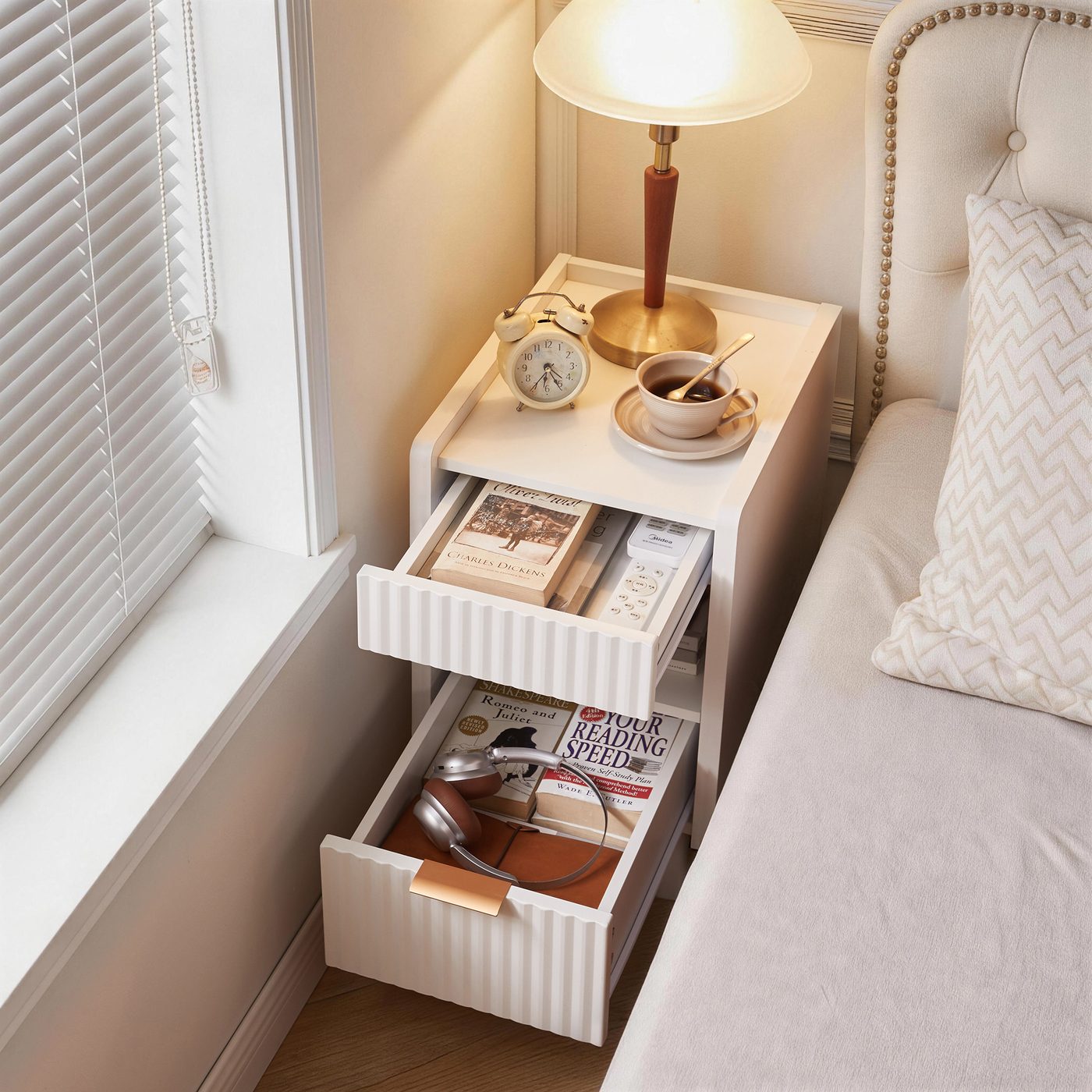
When the paint is the problem, the dark corner yellows first
White paint fails differently, and the counterintuitive part is where it shows.
Dulux’s technical problem solver lists three causes for yellowing on interior paintwork: “Oxidation of alkyd or oil-based paint or varnish,” “heat from stoves, radiators and heating ducts,” and “lack of light (e.g. behind pictures or appliances and inside closets).” Its explanation for the third is blunt: “Solvent-based paints, because of their curing mechanism, do tend to yellow, particularly in areas that are protected from sunlight.”
So the panel that gets the most sun is often not the worst one. The worst one is the drawer front that spends its life closed, the side wedged into a corner, the face behind a door that stays shut. Western Australia’s Building Commission made this formal in Industry Bulletin IB 087/2017, quoting the Australian Paint Manufacturers’ Federation: white or pale enamels “have always tended to yellow with age, particularly in situations where there is poor lighting, eg: sliding cavity doors, or inside or behind cupboards.”
The bulletin adds a line worth keeping for anyone worried about a defect claim: “The yellowing is not detrimental to the performance of the paint film, rather one of aesthetics.” The coating still does its job. It just isn’t the color it was.
A radiator, a baseboard heater or a forced-air vent under a white piece puts heat into the panel that will show it first.
Ammonia does more than most people expect
The same bulletin names an accelerant that has nothing to do with light: “Yellowing, which occurs naturally with age, can also be accelerated by the use of some household cleaners (particularly if ammonia is present).” The APMF advises against “household cleaners containing high levels of ammonia” and notes the content is usually on the label.
Ammonia glass cleaner is a common way to wipe down a nightstand near a window. On a solvent-based finish that’s the wrong product for the surface, even though it’s the right product for the glass above it. On water-based finishes the safe routine is shorter: a damp cloth, mild soap when needed, dry after — the routine we wrote up for cleaning a water-based finish without hazing it.
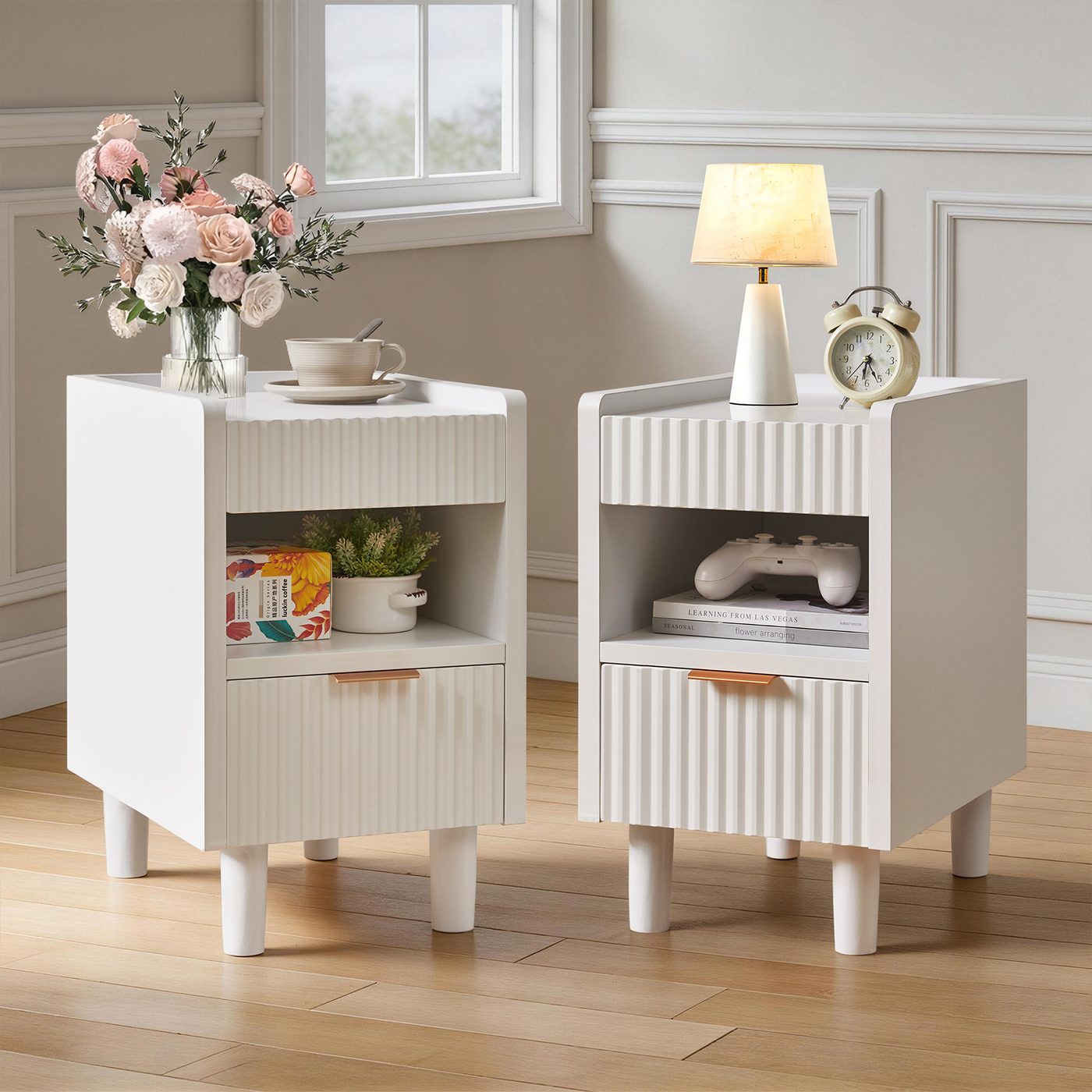
What the five “will not yellow” listings actually claim
Of the 36 listings on this site, 11 name a water-based finish, and five carry the same sentence: “Wipe with a damp cloth. The water-based finish will not yellow.” It appears on the white fluted nightstands and the two-drawer rubberwood nightstand, among others. The white pair is MDF with a white finish, 11.8 × 15.8 × 19.7 in, listed at 21.5 lbs; the rubberwood pair is solid rubberwood with a walnut finish at 11.8 × 15.3 × 19.9 in.
Read it as a statement about the coating’s chemistry: water-based films lack the curing mechanism that turns alkyd films yellow. It is not a statement about three things:
- The wood under a clear film. A walnut-toned finish still drifts warmer over years; you just won’t see it.
- Damage you introduce. Ammonia cleaners, abrasives, hot pans and standing water sit outside any film’s chemistry claim.
- Named products or test data. The listing doesn’t name the topcoat brand or publish aging results, so treat “will not yellow” as a chemistry-level expectation, not a warranty.
One vocabulary trap while reading finish lines: walnut and white are colors here, not species. The white nightstands are MDF; the walnut-finish nightstand is rubberwood. The difference between a stain tone and a wood species is covered in walnut finish vs natural wood wash.
How to tell which one you’re looking at
Work in this order.
- Wash a hidden patch — the back edge of a top, the underside of a shelf — with a drop of mild dish soap and water, then dry it. If it comes up brighter, you had a film, not a coating failure. If nothing changes, stop washing; scrubbing only abrades the film.
- Compare shadowed against exposed faces. If the closed drawer front is yellower than the side facing the window, it’s the paint mechanism described above; if the exposed wood is warmer, it’s the clear coat aging.
- Check the heat. If the worst spot sits above a vent or beside a radiator, moving the piece does more than anything you can apply.
What to check before you buy
Three lines on a product page do most of the work. The finish line tells you what chemistry you’re buying and whether the color is a stain tone or the wood itself. The yellowing claim tells you what the maker puts in writing — a claim scoped to the film is the honest version. The color tells you how much drift you’ll notice, which is why a dark finish on a sunlit desk in our tables category is the low-risk choice.
None of that is a knock on white. It’s the reason white furniture gets blamed for something the coating did.