
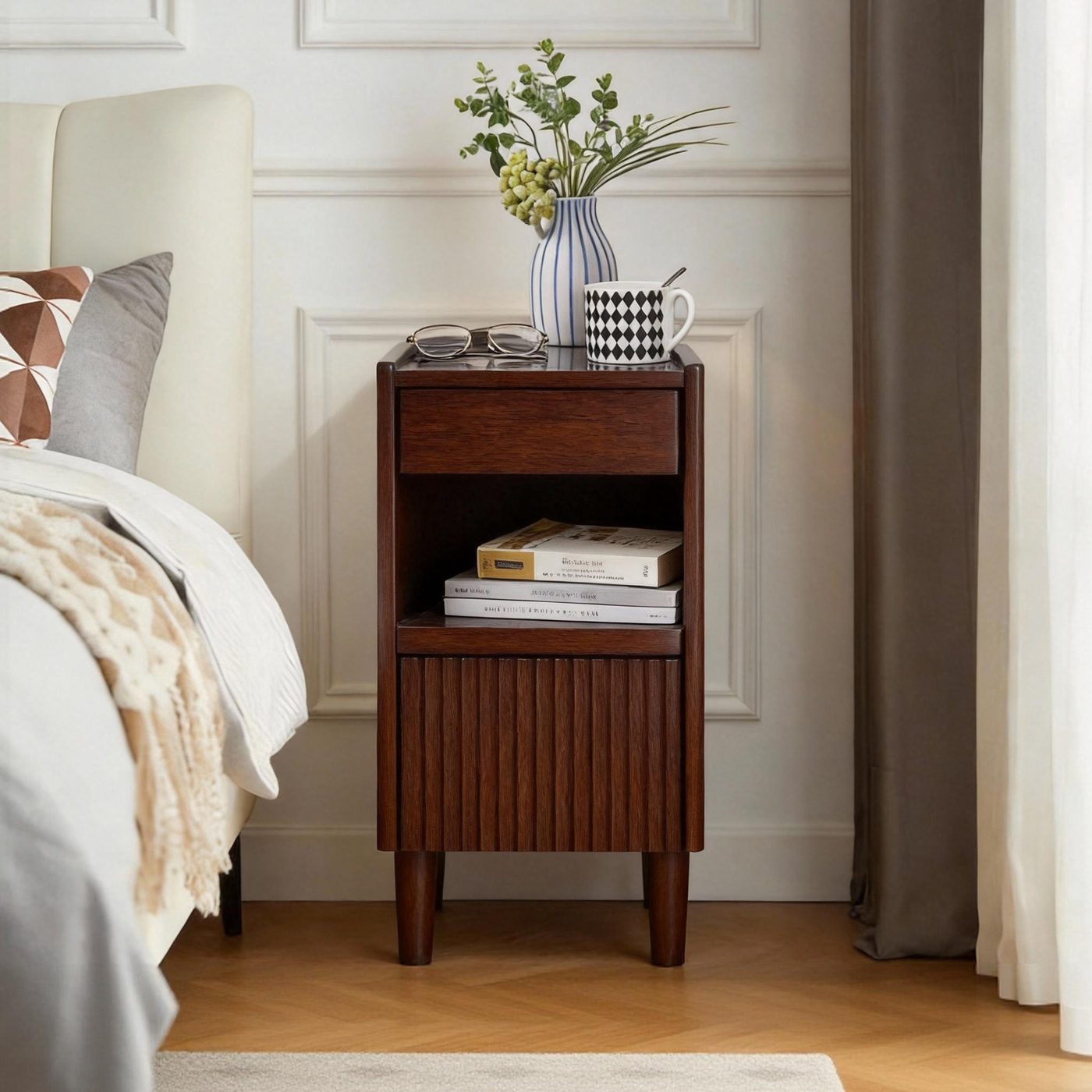
A glass of water goes down on the nightstand at 2 a.m. By eight the next morning it has either left a pale ring or it hasn’t, and that difference is the entire reason one of these nightstands has a glass top. The product page says so in one line: “The top is glass, so a wet glass or a spilled drink wipes off without a ring, which is the reason for putting glass on a bedside table in the first place.”
That sentence is accurate about the top. It says nothing about the wooden shelf sitting directly under that glass, which is where the water goes next.
Why a ring is a finish problem, not a dirt problem
A white ring on a wood top is not something spilled on the surface. Water gets into the finish, and when it dries the mark is left inside the film. That is why no cleaner takes it out: the finish has to be abraded and re-coated, and on a walnut-toned top a local repair usually reads as a patch. The mechanism is covered in what a water-based finish can and can’t survive.
Glass takes that failure mode off the table. Water sits on a non-porous surface instead of going into it, so what is left in the morning is on the glass, and a cloth takes it off.
Which is exactly why the shelf matters.
The shelf under the glass is still wood
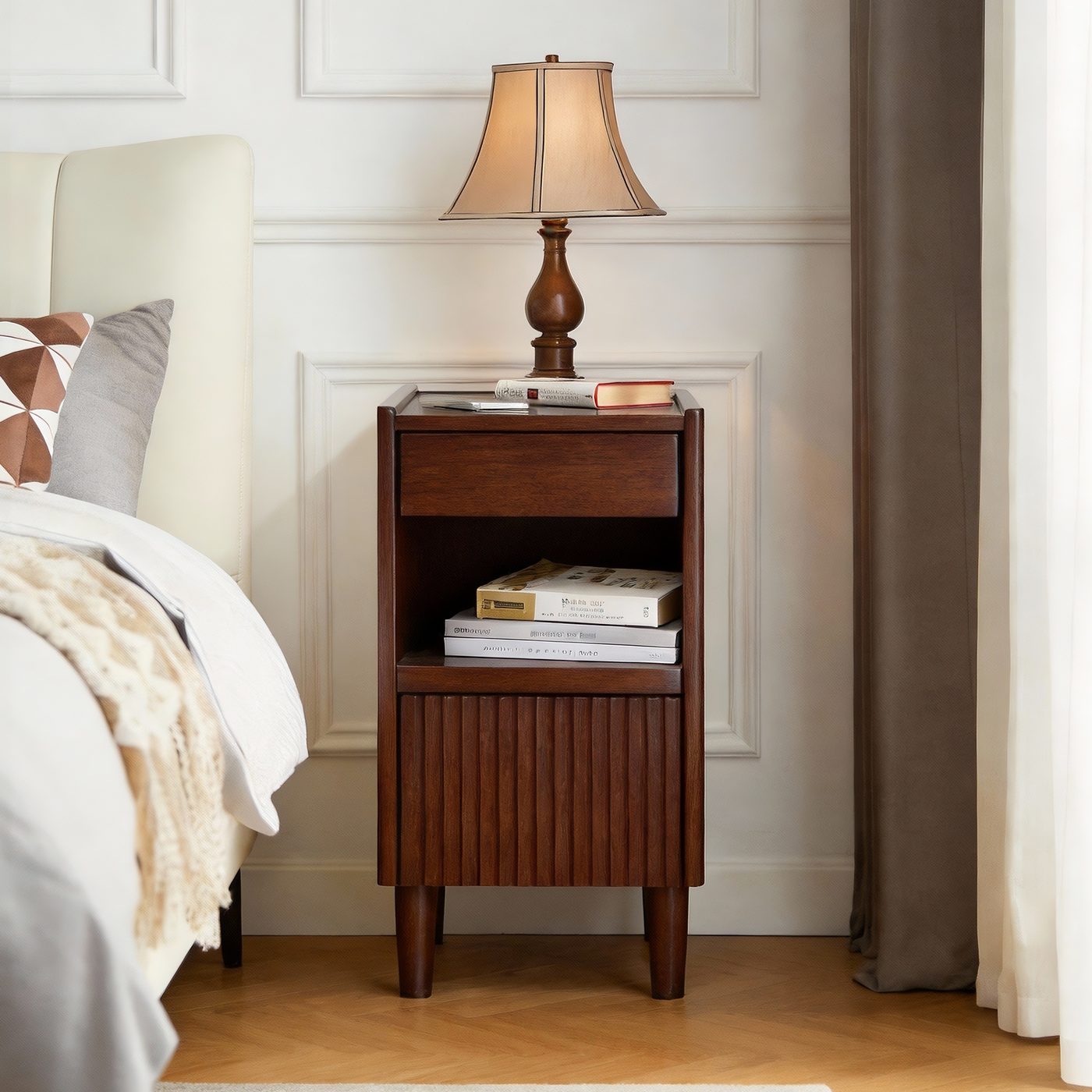
The layout on this 16.5-pound table with the glass top is a glass top, a drawer, and an open shelf directly under the top. The page describes that shelf as the place for “the book, the glasses and the glass of water that need to be within reach at night.”
Two of those three belong there. The third is the one item on the list the glass top was bought to protect against. A sweating glass standing on a wooden shelf overnight does precisely what it would have done on a wooden top: the water goes into the finish and leaves a mark — now one level down, on a surface with no glass over it, where you don’t see it until you pull the books out.
The fix costs nothing: the drink lives on the glass, the book and your glasses live on the shelf. If the water has to be lower than the lamp, put a coaster under it. A coaster on a wooden shelf is the same trade the glass top makes for the whole piece, for about a dollar.
Two materials, two cloths, and the place they must not meet
The care line on the page splits the job in half: “Wipe the wood with a damp cloth and dry it; clean the glass with a normal glass cleaner rather than the wood polish.” Two instructions, not one, because the surfaces want opposite things. Wood takes water and a dry follow-up. Glass takes a cleaner that evaporates clear and leaves no film; furniture polish on glass is a smear, which is why the page names glass cleaner for the top.
The mistake is spraying the cleaner at the top. The glass sits into the wood frame, so the spray that misses runs to the edge, down the frame, and sits in the joint between glass and wood — the seam on the piece where water stays longest. Spray the cloth, then wipe. Wood: a wrung-out cloth and a dry pass with the grain. Glass: cleaner, then a dry cloth.
Grit is the one thing glass does not shrug off
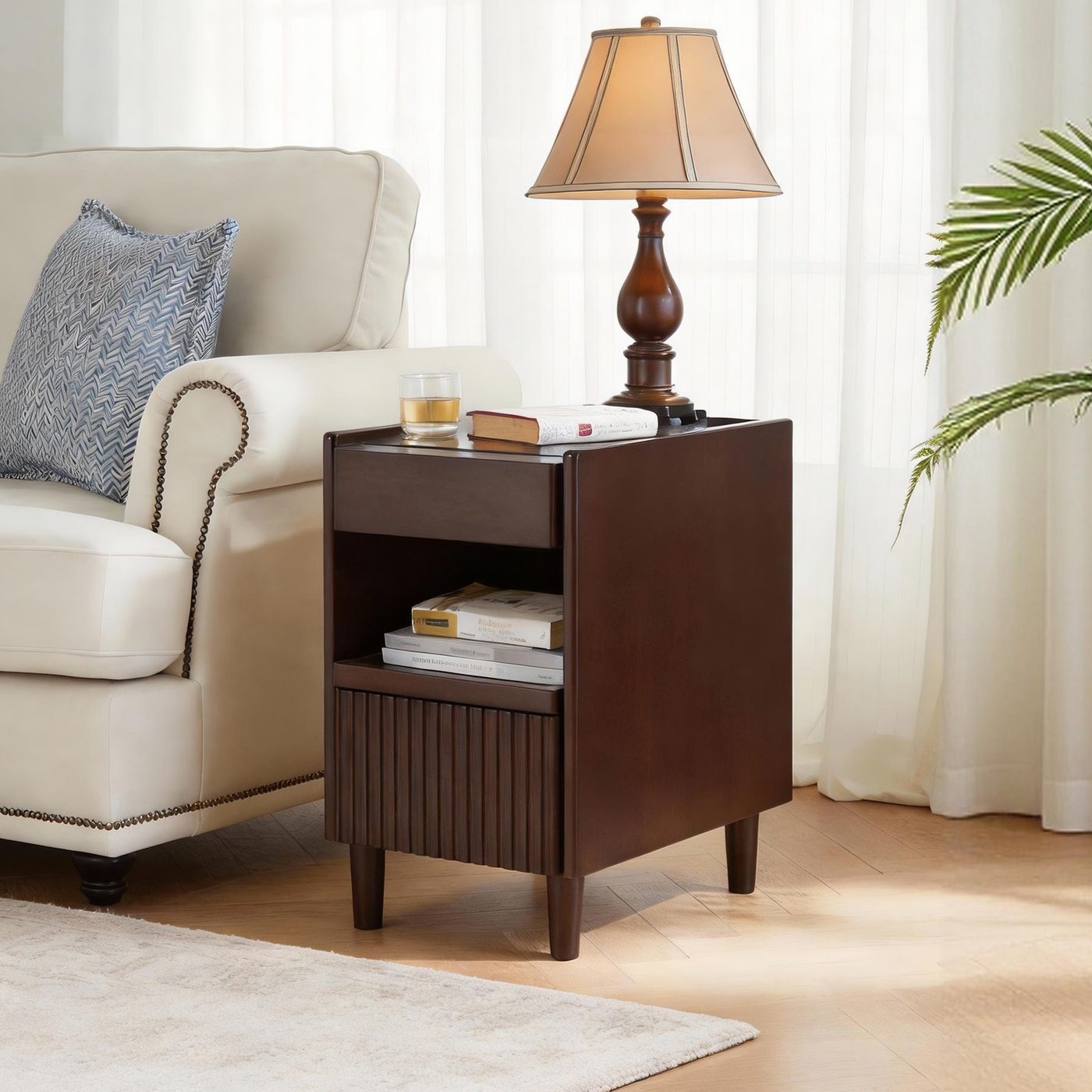
Glass reads as indestructible next to wood. It isn’t next to sand. Geology.com puts the hardness of glass between 4 and 7 on the Mohs scale and quartz crystal at 7, and sand is mostly quartz — so grit that comes in on a bag, blows through a window screen, or spills out of a plant pot can be as hard as the top it sits on.
That changes the method, not the product. Dust the glass with a damp cloth so grit is lifted rather than pushed; if you can see grit, rinse the cloth before the second pass. A dry paper towel on a gritty glass top is a fine abrasive, and fine scratches in glass show up under a lamp long before they show in daylight.
What neither page tells you
Four things are unspecified on both glass-topped nightstands: glass thickness, whether it is tempered, the edge profile, and how the pane is held. None of it appears on the page, and the supplier sheet in our files does not list it either, so I am not going to print a guess. If a heavy lamp base or a specific edge detail matters to you, ask before you order.
What the pages do give you is enough to choose between the four nightstands:
| Top surface | W × D × H (in) | Weight | |
|---|---|---|---|
| Bedside table, one drawer, open shelf | glass | 15.8 × 11.8 × 19.7 | 16.5 lb |
| Two-drawer nightstand | glass | 15.3 × 11.8 × 19.9 | 17.9 lb |
| Fluted nightstands, set of 2 | MDF with a walnut finish | 15.8 × 11.8 × 19.7 | 21.5 lb each |
| Modern bedside tables, set of 2 | engineered wood, rattan fronts | 15.4 × 11.4 × 23.4 | 33 lb each |
The two wood-topped pairs are not worse pieces — they are a different answer to the same question. If you want the grain on the surface you look at from bed, glass is the wrong choice: you are paying for a wood frame and then looking at a pane. If you want a top that stops mattering the moment you put a drink down, glass is the answer to that specific worry. The material differences in the table are covered in how to read solid wood, MDF and engineered wood on a listing.
Who should skip the glass
Skip it if the nightstand doubles as a surface you set things down on hard — a metal lamp base, a full carafe, a phone that lands rather than gets placed. Glass takes those better than a finish does, but it is still a pane in a frame of unspecified type. Skip it, too, if the wood grain is the reason you are buying a wood nightstand at all.
For everyone else the routine is two lines. Drink on the glass, book on the shelf. Spray the cloth, not the top. At 16.5 pounds, one person can move the piece away from the wall to vacuum behind it, which is the only other thing it asks of you.
Choosing between this one and the drawer-heavy version is a 15.8-against-15.3-inch decision, not a glass decision; both are in the bedroom storage collection.
Sources
- runvaus.com — Bedside Table with Drawer and Open Shelf, product page (dimensions, weight, glass top, care line) — https://runvaus.com/product/bedside-table-with-drawer-and-open-shelf/ — accessed 2026-11-27
- runvaus.com — Two-Drawer Nightstand in Rubberwood, product page (dimensions, weight, glass top, care line) — https://runvaus.com/product/two-drawer-nightstand-in-rubberwood/ — accessed 2026-11-27
- Geology.com — “Testing the Resistance to Being Scratched” (Mohs hardness scale: glass 4 to 7, quartz crystal 7) — https://geology.com/minerals/mohs-hardness-scale.shtml — accessed 2026-11-27