

Both nightstands come out of the same delivery. One is light honey tan. The other is a shade darker, with a brown streak across the drawer front. Same SKU, same 11.8 × 15.8 × 19.7 inches, same numbered hardware bag, and they read as two different pieces.
Nothing is broken. What you are looking at is the difference between a part cut from a board and a part cut to a color — and that was decided by one line on the listing, the material line, long before the boxes were opened.
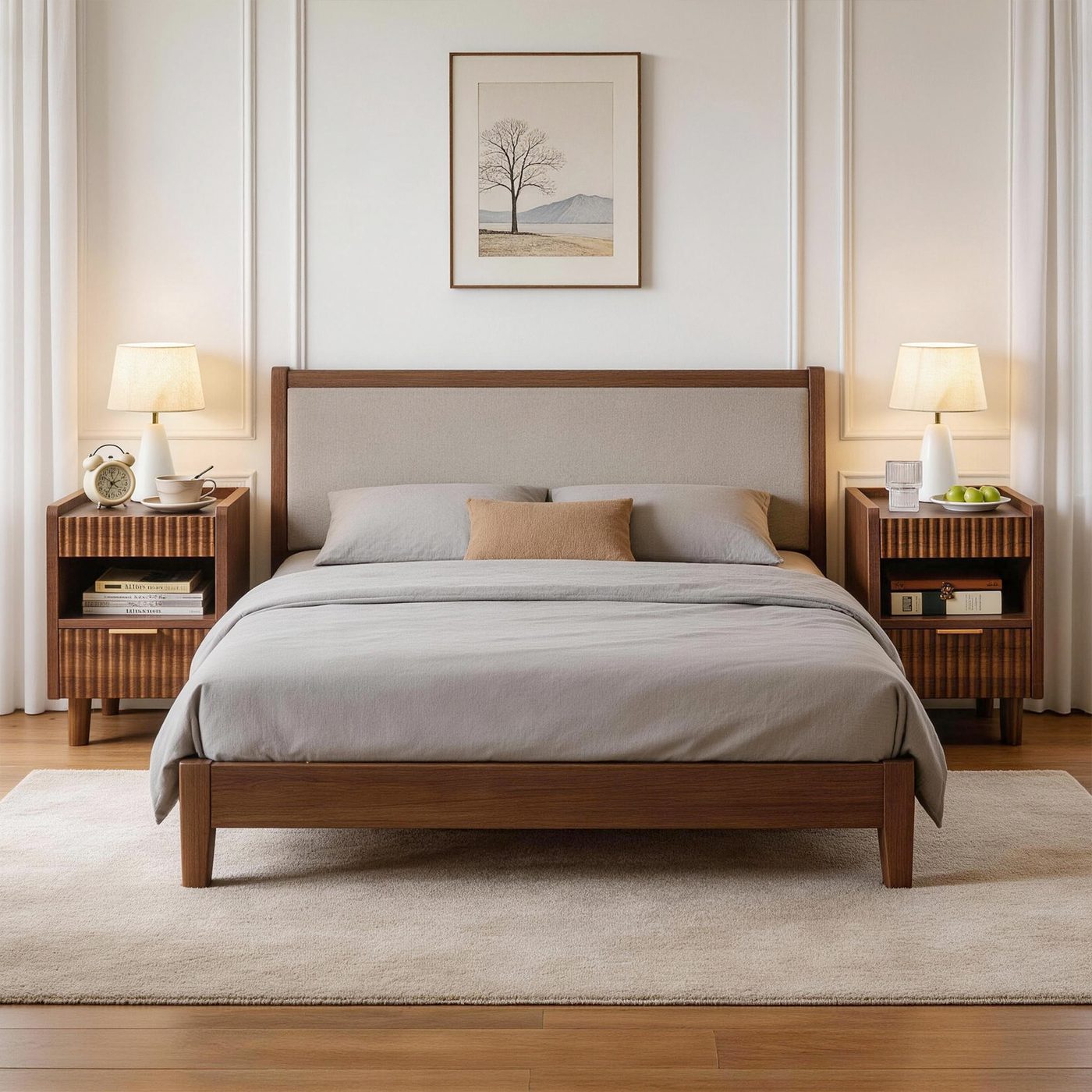
Rubberwood is a color range, not one color
The Wood Database describes rubberwood heartwood as “a light blonde to medium tan color, sometimes with medium brown streaks,” with sapwood “not distinct from the heartwood” and a tone that “tends to darken slightly with age.” Then the sentence that matters for a pair: the wood is “frequently colored or stained when used in furniture construction,” and is “commonly stained and available in a wide range of colors and finishes.”
A set of two is at least two boards, and rubberwood grows across that whole blonde-to-tan range. The factory’s tool for closing the gap is stain — “walnut finish” names the stain, not the lumber, the same naming habit the walnut finish versus natural wood wash comparison unpacks on a different product.
It is also plantation wood rather than a cabinet-grade species: the same page notes rubberwood is cut from trees after their latex years, roughly “thirty years,” and that in the trade it turns up under looser names like “plantation hardwood, or worse, Malaysian oak, though it is not related to true oak.” Our pages state material and finish and stop there. None of them promises a grain match between the two units.
The pairs that arrive looking like copies
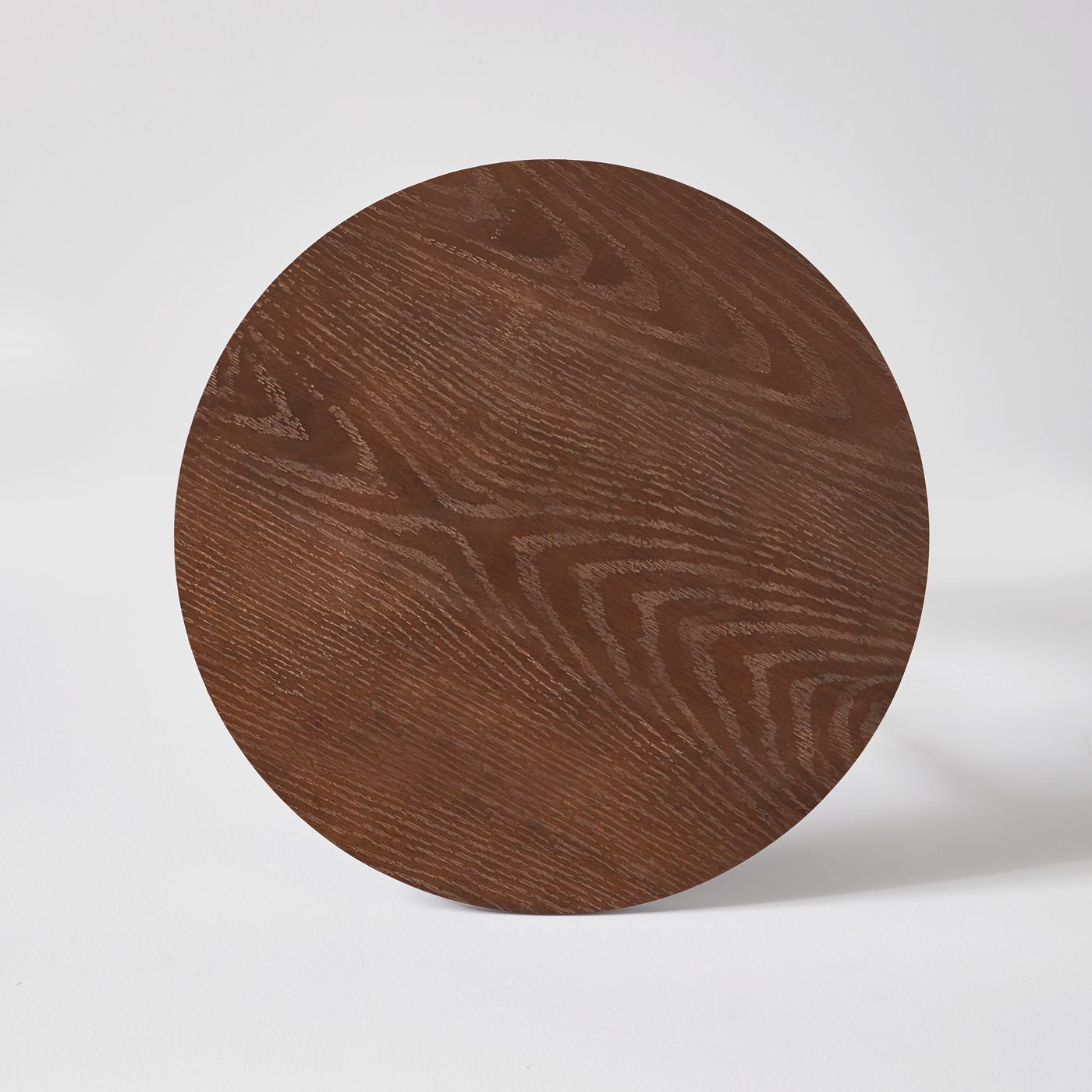
Panels behave the opposite way. The Composite Panel Association defines medium-density fiberboard as “a wood-based composite panel with a flat, smooth, uniform, dense surface free of knots and grain patterns,” and adds that “the homogeneous density profile of these panels allows intricate and precise machining and finishing techniques.”
Read that against the two fluted nightstands at 11.8 × 15.8 × 19.7 inches: no knot to land in a different place, no growth ring at a different angle, no heartwood-to-sapwood shift between one unit and the next. What is left is the finish, which the page describes as water-based and says will not yellow. The fluted front is the other half of the argument — a dense uniform panel is what takes a machined, groove-by-groove profile cleanly. If the two sides of a bed have to read as one piece, this is the material that gets you there, and the nightstand and bedside pairs are all in this group.
What “defect” means in the lumber trade
A knot is a defect in grading language, and that word is not an insult. The American Hardwood Export Council sets out the grades the US trade uses: FAS boards yield 83⅓% to 100% clear-wood cuttings, in boards at least 6 in wide and 8 ft long; No. 1 Common runs from 66⅔% up to the FAS minimum, in boards 3 in wide and 4 ft long; No. 2A Common, “often referred to as the Economy grade,” covers 50% to 66⅔%. Every percentage is a measure of clear surface — wood with no defect in the way of a cutting.
So a knot costs a board its clear area. That is a yield calculation done at the mill on rough lumber, not a verdict on the panel in your bedroom — and the rules admit it: No. 2B Common allows cuttings “only required to be Sound,” a lower bar than clear. A sound knot is still a knot. AHEC also notes that “between buyer and seller any exception to these rules is permissible and even encouraged.” The grade belongs to the transaction, not to your furniture.
Five sets, and what can differ between the units
| Set | Material line on the page | What can differ |
|---|---|---|
| Fluted Nightstands, Set of 2, Walnut | MDF with a walnut finish | Finish tone only; no knots or grain pattern |
| Fluted Nightstands, Set of 2, White | MDF with a white finish | Finish tone only |
| Modern Bedside Tables, Set of 2 | Engineered wood, natural wood finish | Finish tone only |
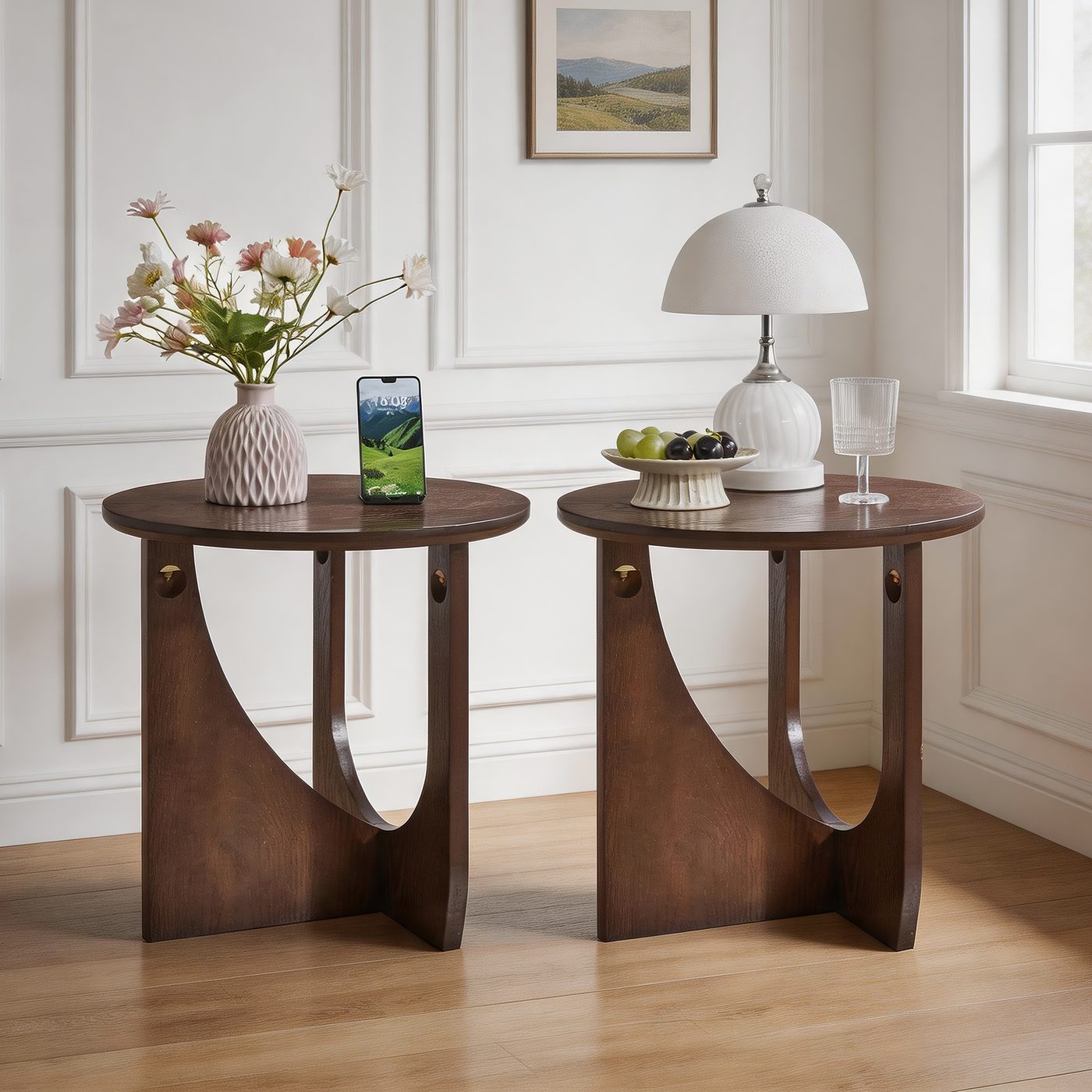
| Solid Wood Side Tables, Set of 2 | Solid rubberwood, 19.7 × 19.7 × 19.7 in | Tone and grain: blonde to tan, brown streaks |
| Solid Oak Dining Chairs, Set of 2 | Solid red oak, sold as a pair | Grain figure per chair; the page warns direct sun changes the oak’s colour |
Two minutes with both pieces out of the boxes
Use daylight, not the corner lamp, and compare the units side by side.
- A tight knot sits flush and sealed under the finish, grain running around it. Normal on solid wood.
- A loose knot, or an edge you can feel, is not a color question. It is a question about whether that spot stays put.
- A crack running from a knot into a joint is wood movement, not a knot problem. Photograph it before assembly.
- A hard line across a flat face, or a dull patch that will not wipe off, points at the finish rather than the wood.
- Tone and grain differences are the expected result on rubberwood or red oak, and the reason the pairs above split into panels and boards.
Look hardest at the faces you will look at every night — the two drawer fronts — and least at a side panel facing the wall.
What the return policy covers, and what it does not
The shipping and returns page accepts returns “for damaged or incorrect items,” with 14 days from delivery to tell them, a photo of the damage or wrong item plus the shipping label to hello@runvaus.com, and return shipping covered when the problem is on their side. It also rules out three things: “change of mind, wrong colour chosen, or a piece that is simply larger or smaller than expected.”
Read that honestly. Two solid wood units that differ in tone are not damage, and they are not “wrong colour chosen” either — you did not pick the colour, the boards did. If the difference is more than you want to live with, email before assembly with both units photographed in the same light. What comes back is a judgment call on their side, not something this article can promise.
Which pair to buy
Want symmetry. Buy a panel pair — the fluted nightstands or the engineered bedside tables. They match for the same reason a printed page matches: no grain to disagree.
Want visible wood. Buy the solid rubberwood pair or the red oak chairs. Expect the tone to sit in the blonde-to-tan range, deepen a little over the years, and differ between the two units.
Already staring at the difference. Decide before assembly whether it is tone or a finish fault, photograph both units in daylight, and use the 14 days.
A tone difference also reads worst in a symmetrical bedroom, where the eye compares both units without being asked. Move one to the far side of a door and the comparison disappears — a cheaper fix than a return. The tables category lists the rest of the site’s tables with material on each page.